Section 17.2 What Your Presentation Should Entail
As an engineer, you will typically be presenting on projects you are proposing or presenting data from projects that you have already completed. All of the advice from this chapter (no such thing as over-preparing, etc) will be helpful in reducing stage anxiety but to make sure that your presentation is well received, you need to make sure that the presentation contains the appropriate material.
You will be expected to have the following sections: title, introduction, materials and methods, results, discussion, and conclusion. The following example presentation will highlight the most important and standard slides that your presentation should (probably) entail.
To describe each of the required sections (keep in mind that I am showing only one slide for each section but it is likely that you will need multiple slides) I included example slides from a presentation I gave at an American Society for Engineering Education conference in 2019 in which I won the “Best Presentation” award. Note, that the slides shown below are only a subset of the slides that I presented at the conference. For the full slide deck, you can click here.
Title Slide
The title slide is just a place to include the names of all the people that worked on the project and their affiliations. And the title. Duh.
Keep it simple.

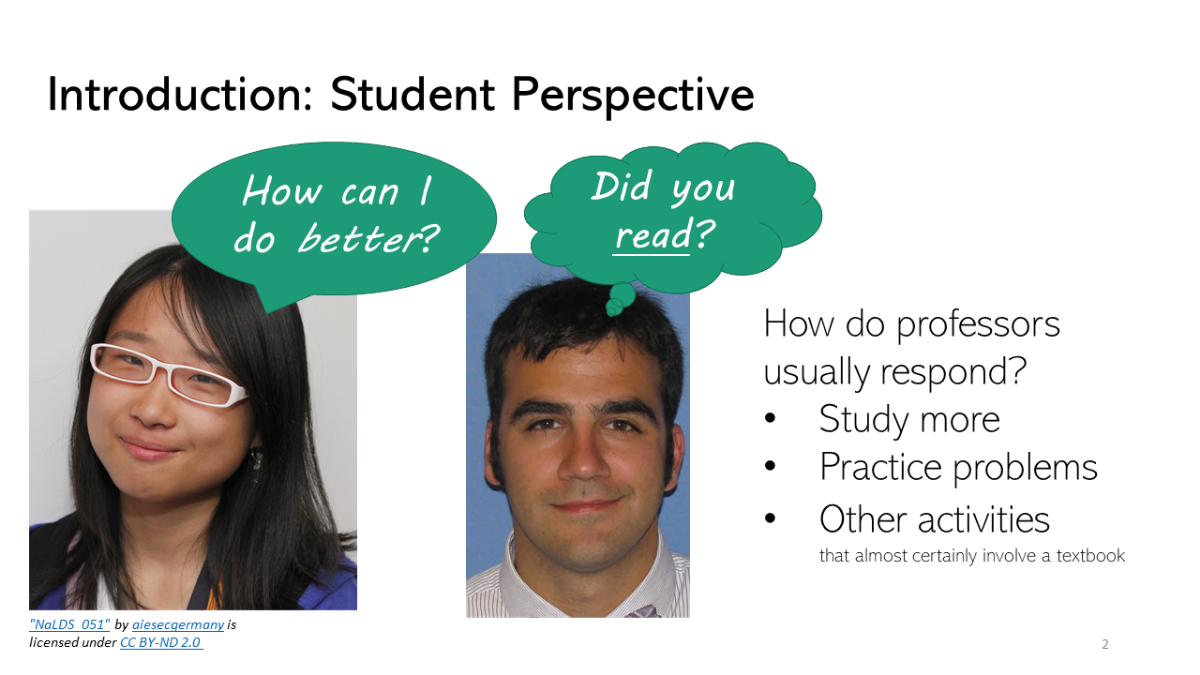
Introduction/Background Slide(s)
The purpose of the introduction slide is to outline your current understanding of the subject. You need to include specific examples of previous work/research.
-
Clearly explain the importance of the current project and what the significance of the project will be.
-
Justify the merit of your project by presenting significant information.
-
End with a specific, clear, and explicit purpose for the project. Some of the projects that you complete during your undergraduate career will be chosen for you. It does not mean that the purpose of the project is “because the professor told me to do it”. Spend some time thinking about the project and what learning outcomes you are expected to gain from it.
Material and Methods
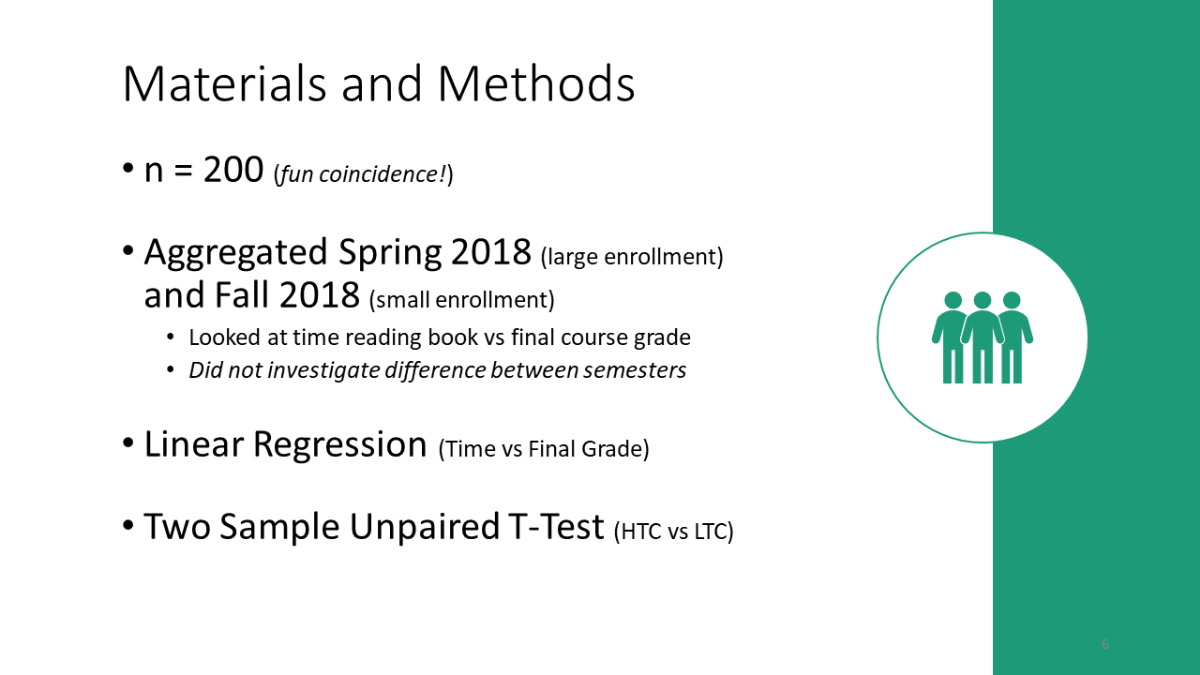
The purpose of the materials and methods slide is to list the necessary steps for your audience to interpret the results.
-
You should include: sample sizes, how the data will be processed, everything that was used in the project, and what statistical tests if any will be used.
-
It should be clear how the materials and methods relate to the purpose of the project.
-
The audience should feel that presenters fully understand the scope and details of the work (especially if it is a proposal).
Results
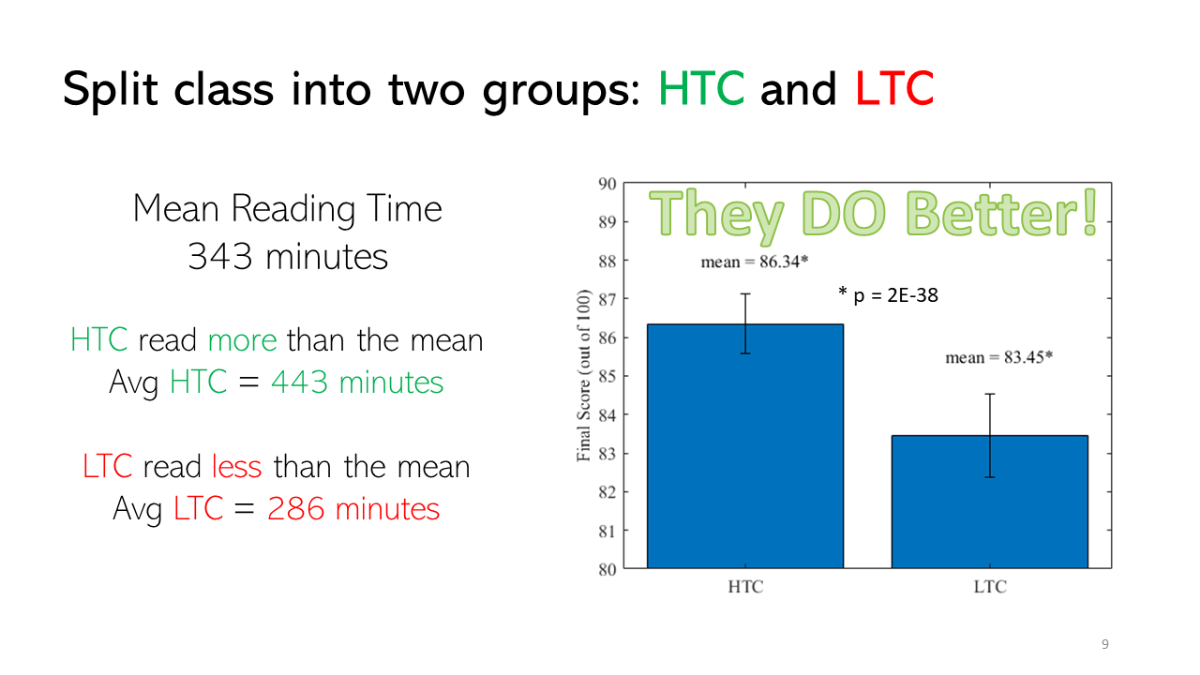
The results slide is the place where you describe what you found from your project.
-
Present the data from the project. What did you do? What did you find?
-
Do not interpret your results yet! Just show what you gathered.
-
Visual descriptions of your data are important. Be sure to include figures and tables as appropriate.
Discussion
Although it might seem like your results are the most important slide, I would argue that it is actually your discussion slide. Whereas in your results section you simply tell your audience what you found, in your discussion section, you need to interpret the results for your audience.
-
Interpret the data from the results section.
-
Answer the “why” of the data.
-
Draw conclusions about the project.
-
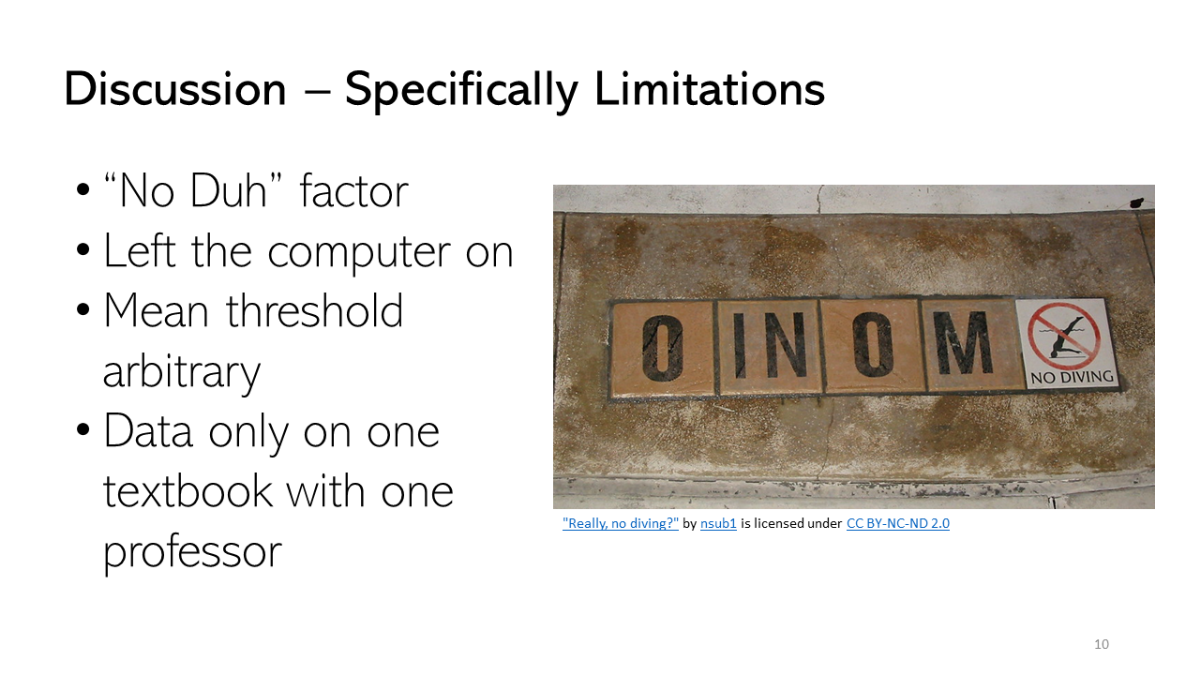
List any limitations of the project.
-
Discuss future work.
Conclusion/Significance
Finally, we get to the conclusion slide. This is another very important slide as it can be an opportunity to reinforce the takeaway message that you want to give your audience.
-
Should be a “natural” conclusion. Your presentation should not end abruptly. The audience should feel it coming.
-
Summarize the major points from your presentation. Be sure to provide your audience with a take-home message.
-
Summarize the weaknesses of the project. It shows that you can critically think about your own work and makes your audience more sympathetic to your position. Admitting what you would change actually strengthens your position.