Section 6.7 Quadric Surfaces in the World
The surfaces of this section are more than abstract shapes. Each one appears in the physical world, and often it appears because of the very geometric properties we have been discovering by slicing.
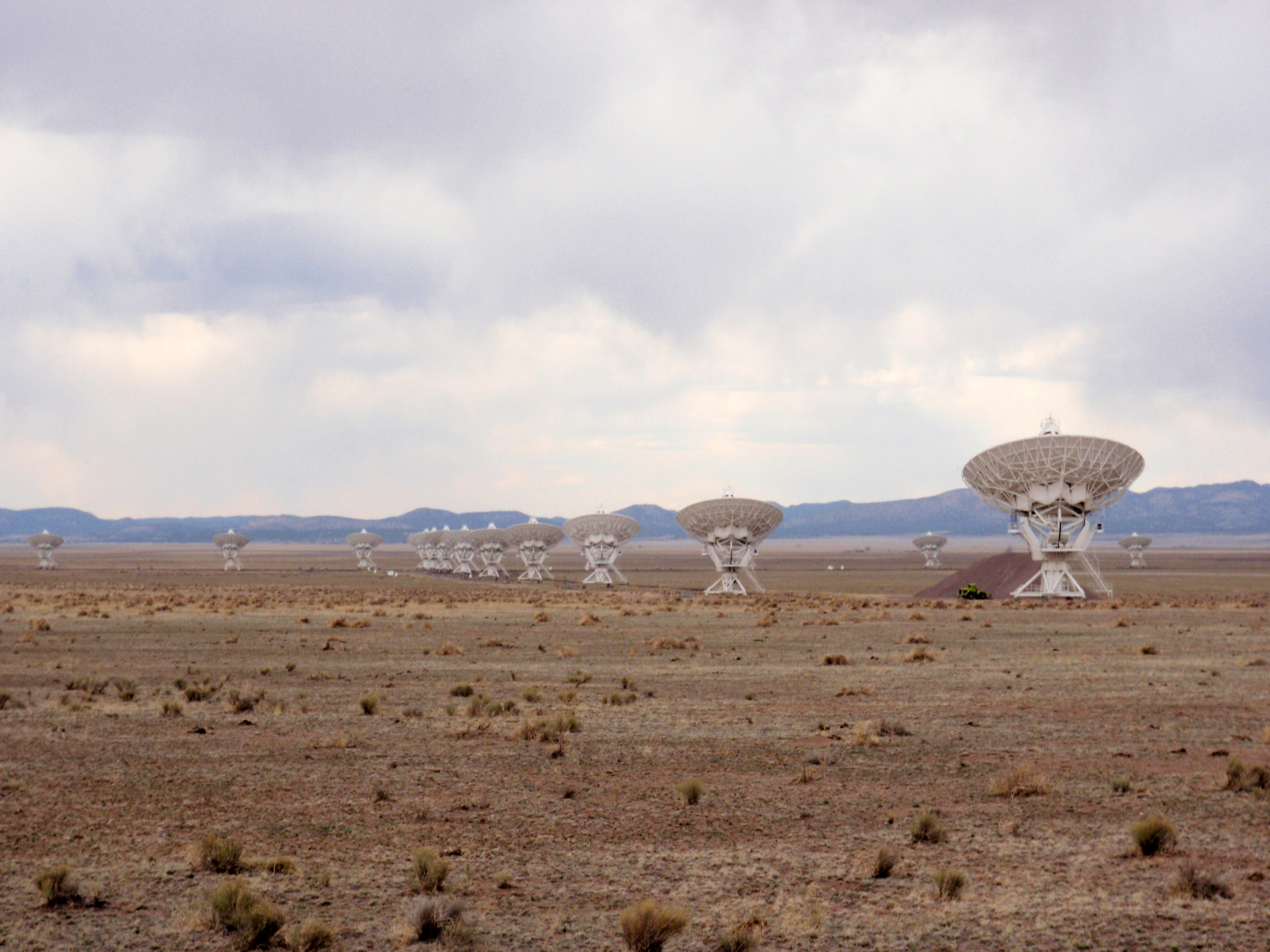
Elliptical paraboloid. A paraboloid has a striking reflective property: every ray travelling parallel to its axis bounces off the surface and passes through a single point, the focus. This is why the dishes of radio telescopes and satellite receivers, and the reflectors behind car headlights and solar concentrators, are shaped like paraboloids — they gather parallel incoming rays to one point, or, run in reverse, send rays out in a single parallel beam. The benefit is sensitivity: because parallel rays converge on the focus no matter where they strike the surface, enlarging the dish simply gathers more of a faint signal onto the same receiver, letting a radio telescope detect fainter and more distant objects. The National Radio Astronomy Observatory explains how a parabolic dish bounces incoming radio waves to a focus.
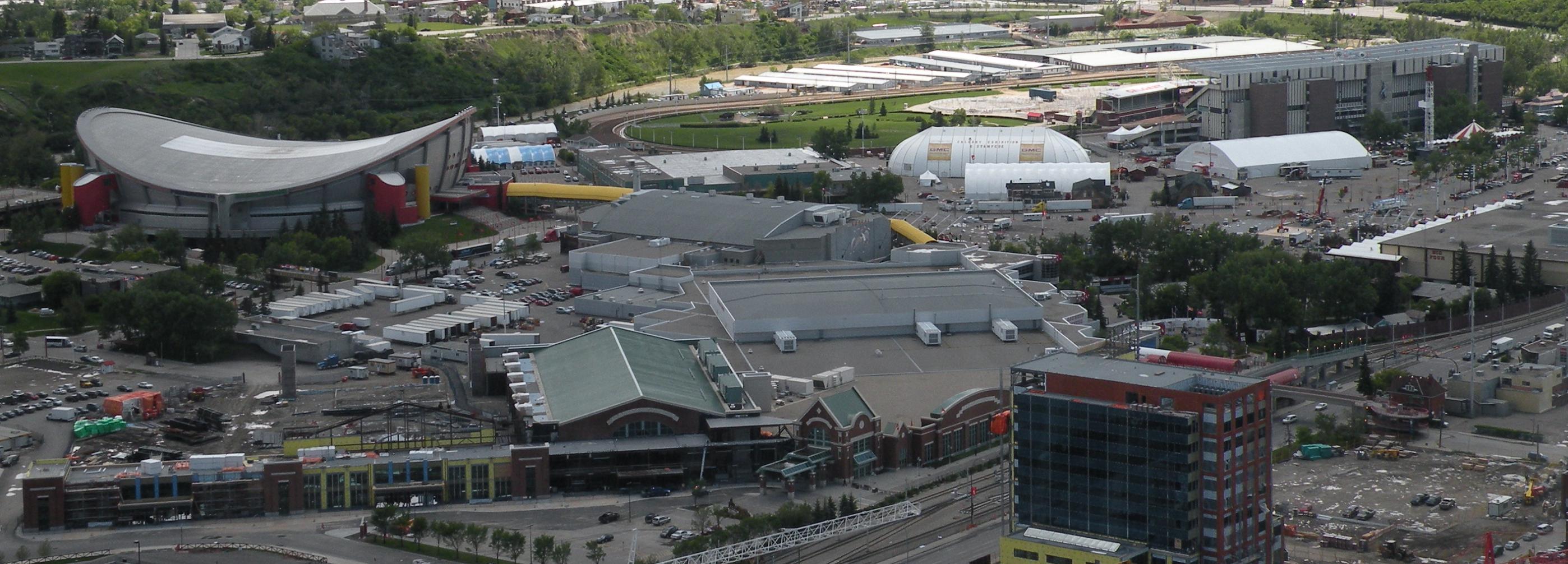
Hyperbolic paraboloid. The saddle is doubly ruled: through every point pass two straight lines that lie entirely on the surface, just like the flat traces — the two crossing lines in the plane \(z = 0\) — that appear when we slice it in Figure 6.5. A doubly curved roof can therefore be built out of straight beams, or poured over straight formwork, which makes the hyperbolic paraboloid both strong and inexpensive to build. It is the shape of many “saddle” roofs and of Félix Candela’s thin concrete shells — and, on a smaller scale, of a Pringles potato chip. The benefit is efficiency: a thin shell of this shape carries its load by compression and tension acting within the surface rather than by bending, so it can roof a very wide span with only a few inches of material. Encyclopaedia Britannica’s article on shell structures describes how such curved roofs are engineered from straight lines.
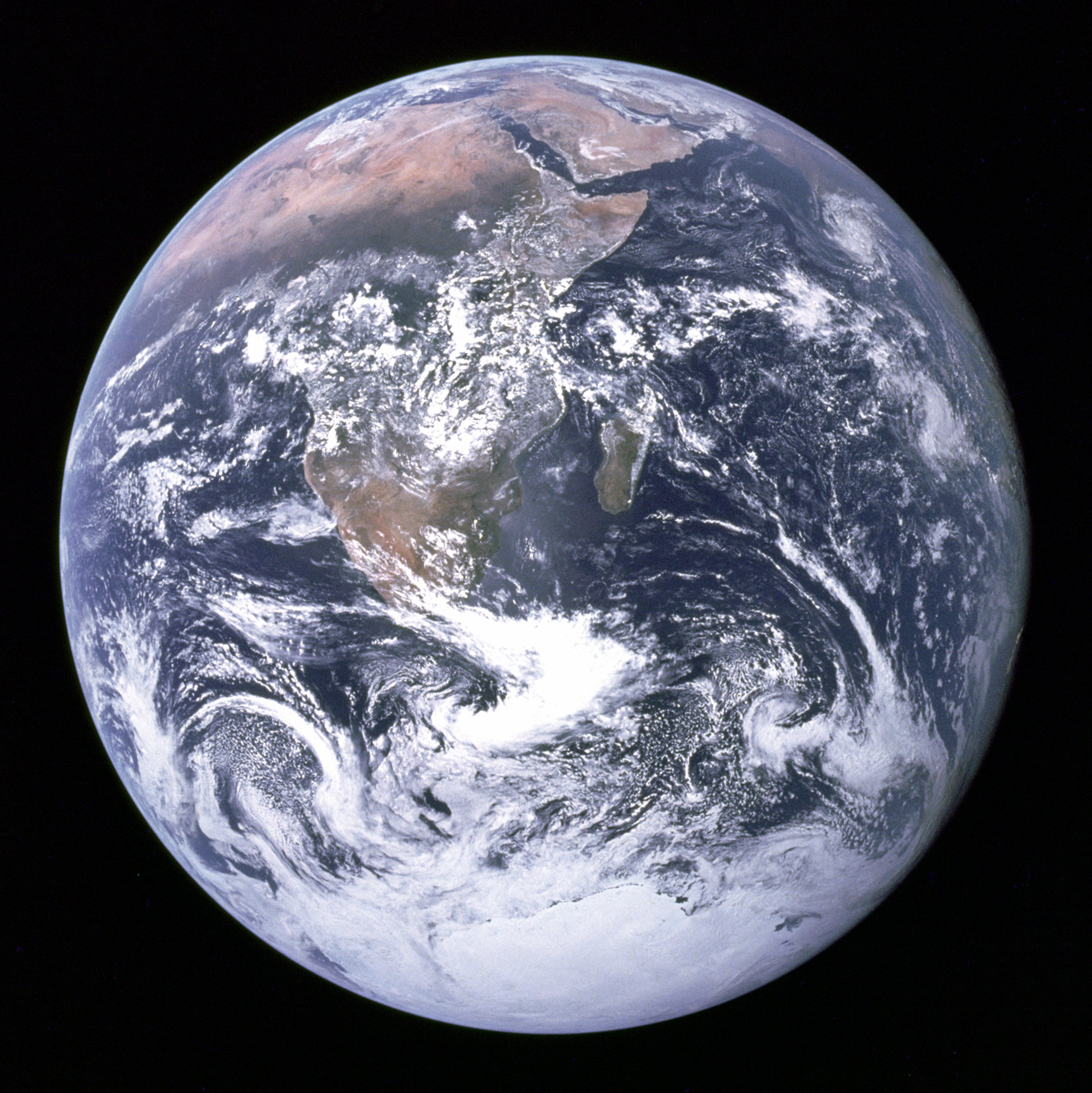
Ellipsoid. An ellipsoid has two focal points, and a wave leaving one focus reflects off the surface straight toward the other. In a “whispering gallery” a whisper at one focus is heard clearly across the room at the other; in medical lithotripsy a shock wave generated at one focus is focused onto a kidney stone placed at the other, breaking it apart without surgery. On the largest scale, the Earth itself is modeled as a slightly flattened ellipsoid — the reference ellipsoid against which GPS coordinates are measured. The benefit of this two-focus focusing is precision without contact: a lithotripter can concentrate its energy on a stone deep inside the body while sparing the surrounding tissue. Modeling the Earth as an ellipsoid brings a different benefit — a single smooth equation captures its slight flattening, giving GPS a far more accurate reference than a sphere would. NOAA’s National Geodetic Survey describes the reference ellipsoids that anchor those coordinates.
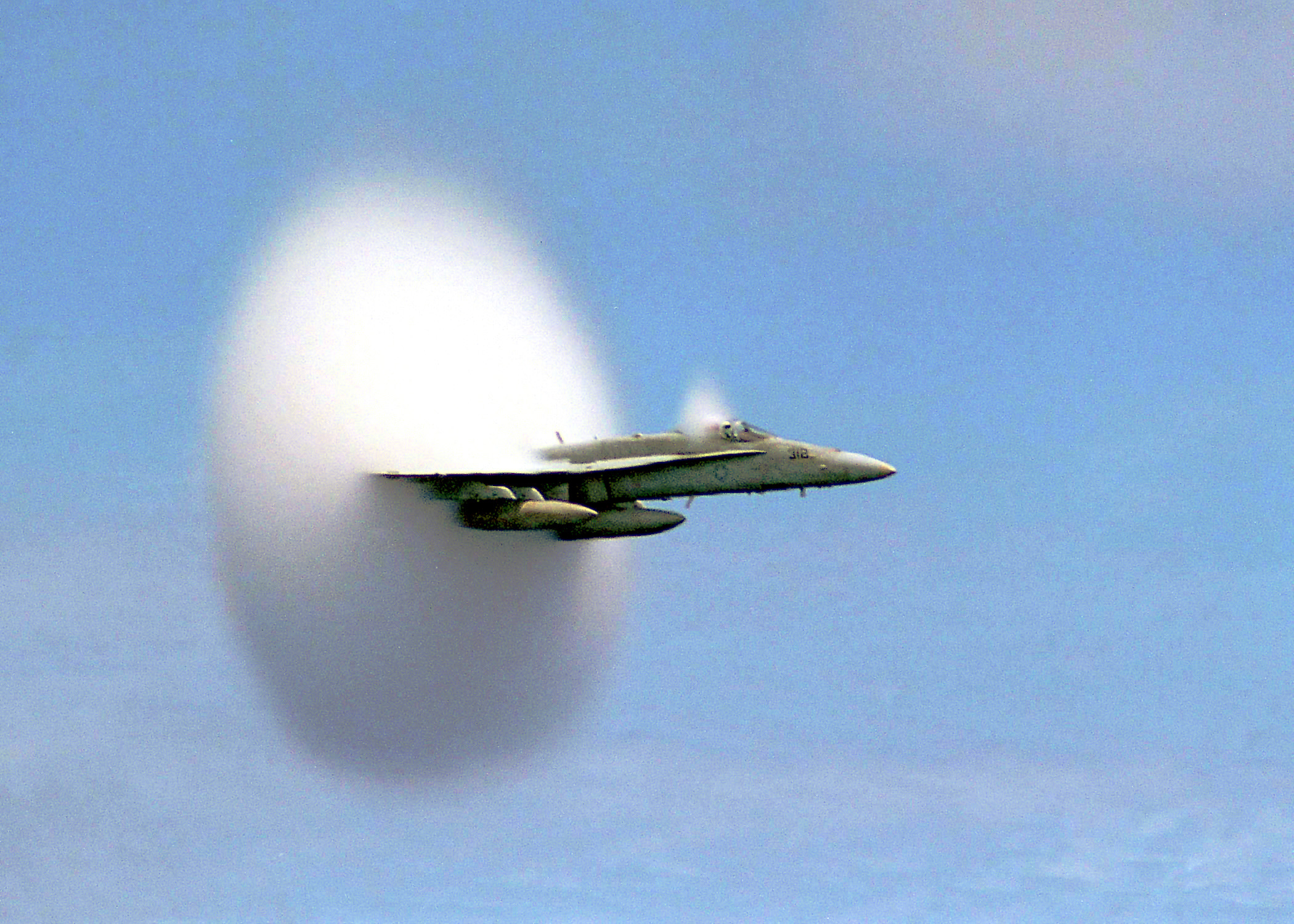
Elliptic cone. When an aircraft flies faster than sound, the pressure waves it creates pile up into a cone that trails behind it, the Mach cone. The sonic boom you hear is the instant this cone of compressed air sweeps past you. This cone is not a design choice but an unavoidable consequence of the motion; even so, its geometry is informative: the sine of its half-angle equals \(1/M\text{,}\) where \(M\) is the Mach number, so a narrower cone means a faster aircraft. NASA’s Glenn Research Center describes how supersonic disturbances stay confined within this cone.
Hyperboloid of one sheet. Like the saddle, this surface is ruled — recall the two straight-line traces we found in the planes \(x = \pm 2\) in Activity 6.5.1. Because straight members can be arranged to sweep out its double curvature, it can be built cheaply from straight beams or straight formwork while remaining very stiff. This is exactly why the cooling towers of power plants, and open lattice towers such as Vladimir Shukhov’s, are hyperboloids of one sheet. The benefit is that stiffness and wind resistance come almost for free: because the surface is ruled, the whole tower is assembled from straight, easily fabricated members, so it reaches great height with remarkably little material. The University of Houston’s Engines of Our Ingenuity tells the story of Shukhov and these ruled towers.

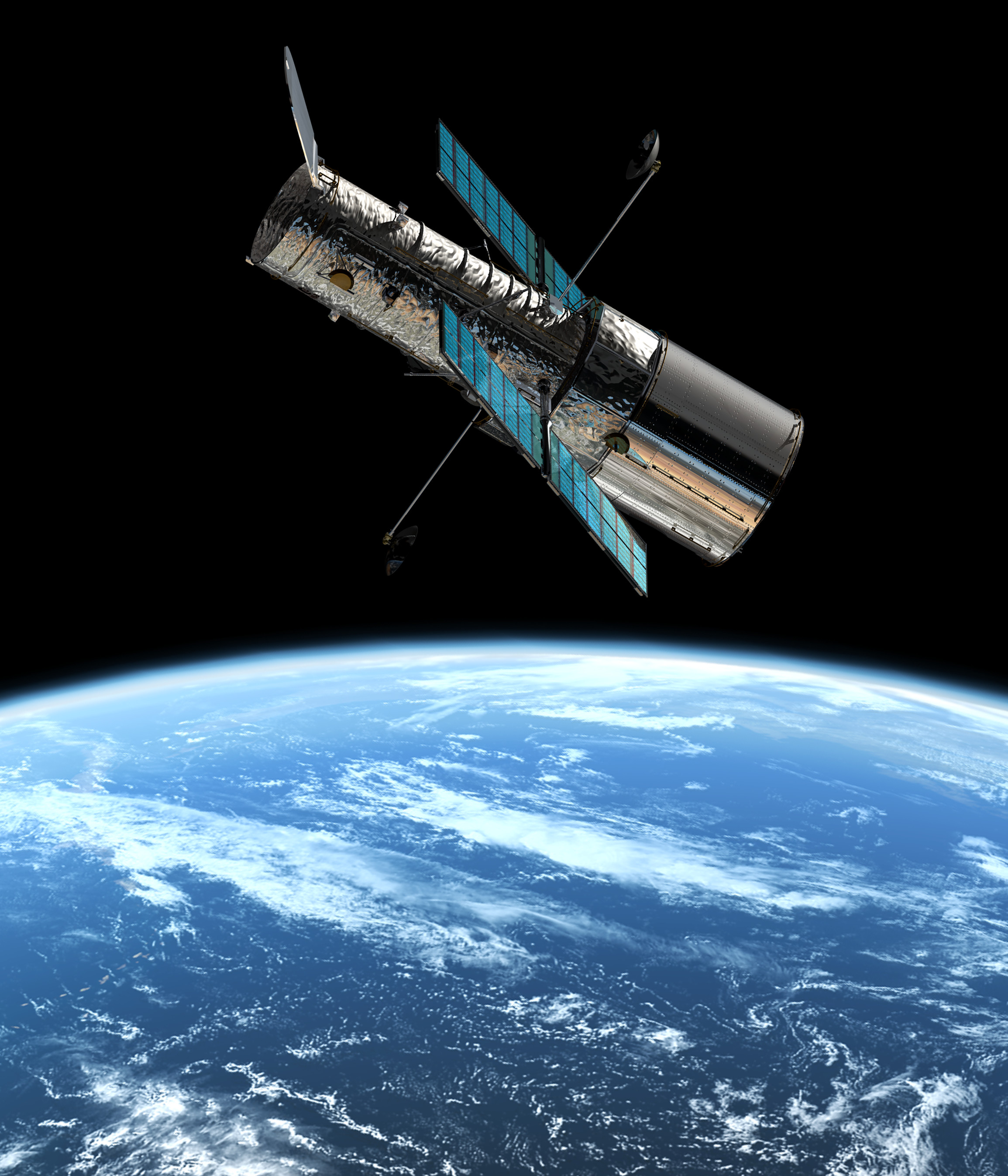
Hyperboloid of two sheets. Like the ellipse, a hyperbola has two foci, and a ray aimed at one focus reflects toward the other. Reflecting telescopes of the Cassegrain and Ritchey–Chrétien type — including the Hubble Space Telescope — use mirrors ground to hyperboloidal shapes to fold a long optical path into a short tube. The same two-focus idea drives hyperbolic navigation: comparing the arrival times of two signals places a receiver on a hyperboloid, and intersecting several such surfaces is how systems from LORAN to GPS pin down a location. The benefit is sharpness in a compact instrument: the paired hyperboloidal mirrors fold a long focal length into a short tube and cancel the aberrations that would blur a simpler design, keeping Hubble’s images crisp across its whole field of view. NASA explains how these curved mirrors gather starlight in its overview of the Hubble Space Telescope’s optics.
You have attempted of activities on this page.

