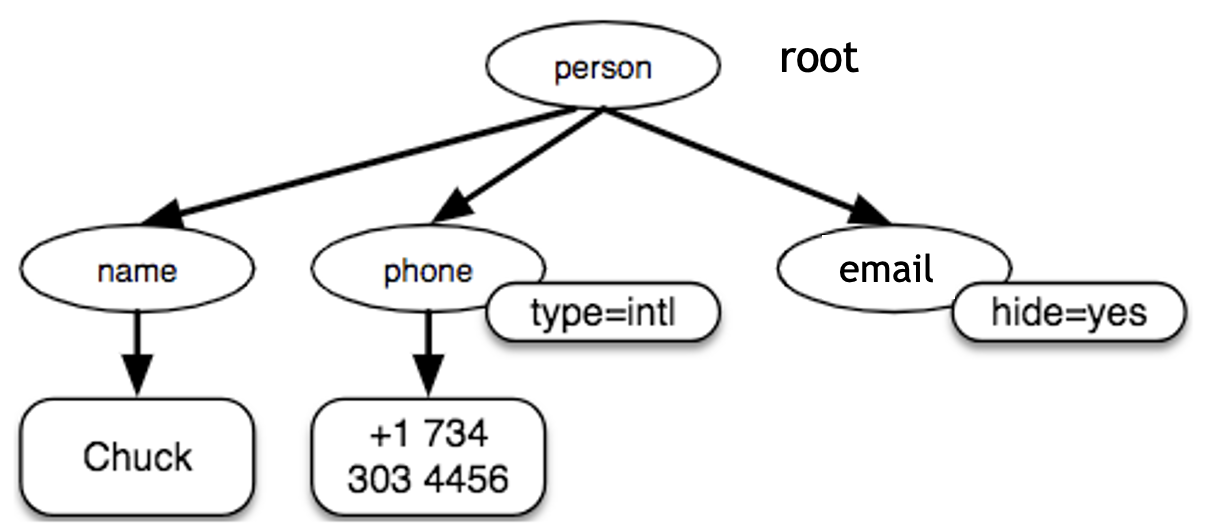
Each pair of opening (e.g., <person>) and closing tags (e.g., <\person>) represents a element or node with the same name as the tag (e.g., person). Each element can have some text, some attributes (e.g., hide), and other nested elements. If an XML element is empty (i.e., has no content), then it may be depicted by a self-closing tag (e.g., <email />).
Often it is helpful to think of an XML document as a tree structure where there is a top/root element (here: person), and other tags (e.g., phone) are drawn as children of their parent elements.
<food><name>French Toast</name><price>$4.50</price><description>Thick slices made from our homemade sourdough bread</description><calories>600</calories></food>