
Section 11.2 Meet The Interviewees
Section 11.2.1 Anaya Taylor
"I’m about average at most things... [but] when I get stuck... I’m kind of stubborn. That perseverance has really helped me."
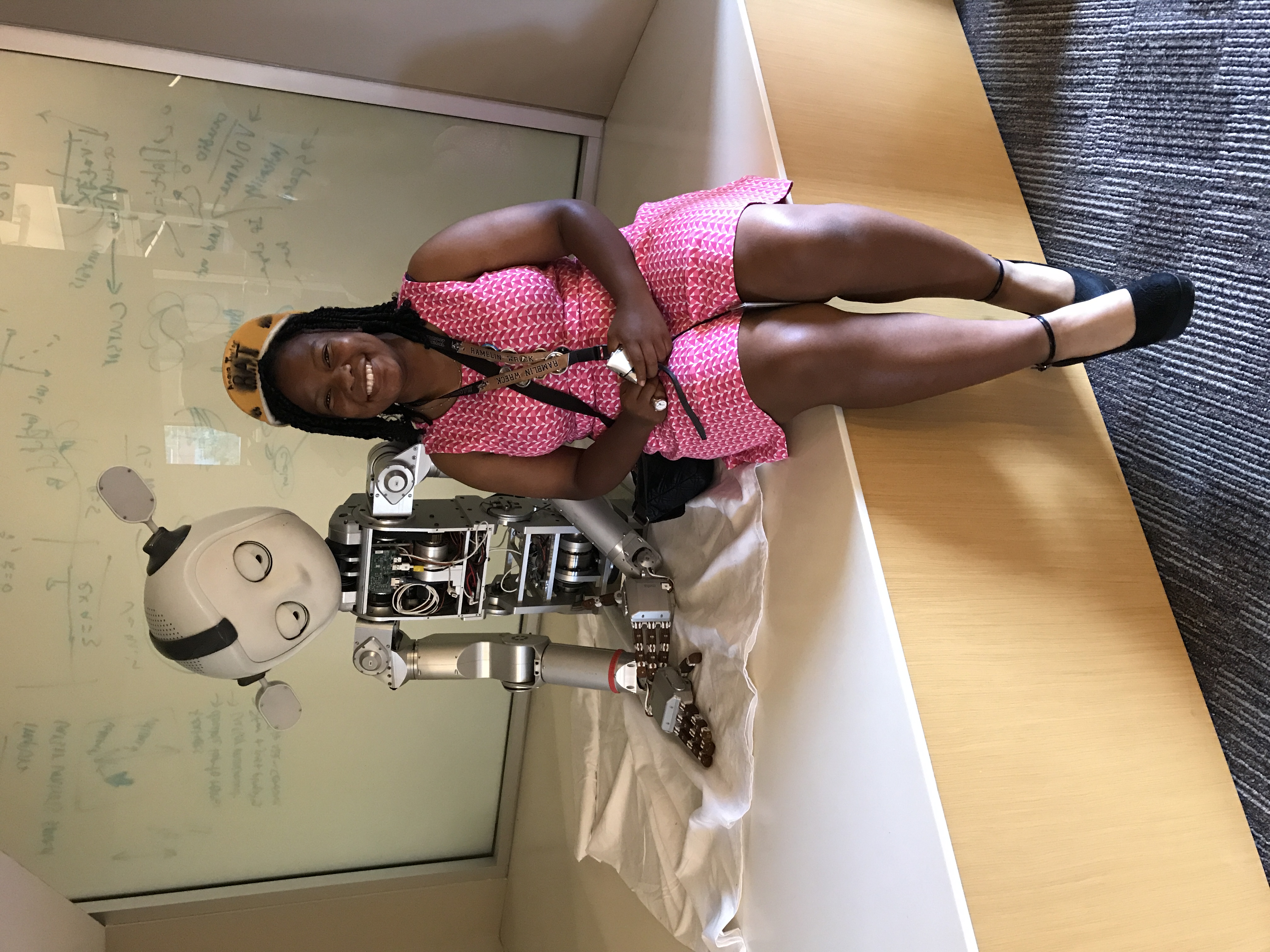
How did she get into computing?
“My first exposure was that club in high school. We didn’t do much coding, but there were a lot of fun projects with like messing with Arduinos and LEDs, and stuff like that. And then it progressed to the Rise Up camp, where we were coding in this animation program called Alice. That was really fun to work with, but it was also kind of difficult because if you didn’t do something quite right, the animation wouldn’t turn out too good. It was fun, I really enjoyed it.”
What subfield is she interested in?
“I’m currently an IT software engineer. The first few weeks, I didn’t really know what was going on, but as we’ve progressed, it’s become enjoyable, and I understand more.”
Anaya is a software engineer, which means she develops software for the company she works at. She works with colleagues to seek and create solutions for the firm’s problems.
What does she dislike in computing?
“There can be people that are a bit stuck-up and look down on you when you seek help. Not for any reason in particular, but just because that’s how they perceive themselves. So that can be annoying, but it’s also kind of easy to ignore since it’s such a big environment.”
What does she do in her free time?
“One of the best experiences for me was seeing a student that I had worked with come into Georgia Tech, and see her join our department.”
Anaya mentors for Rise Up 4 CS, a group that provides guidance and role models to underrepresented students in Computer Science. In high school, they supported and enabled her journey in CS, which led her to want to pay it forward.
Section 11.2.2 Bryan Hickerson
"Having a product that actually has an impact, doing work that has an impact, [and] being able to have a strong influence was really impactful for me."
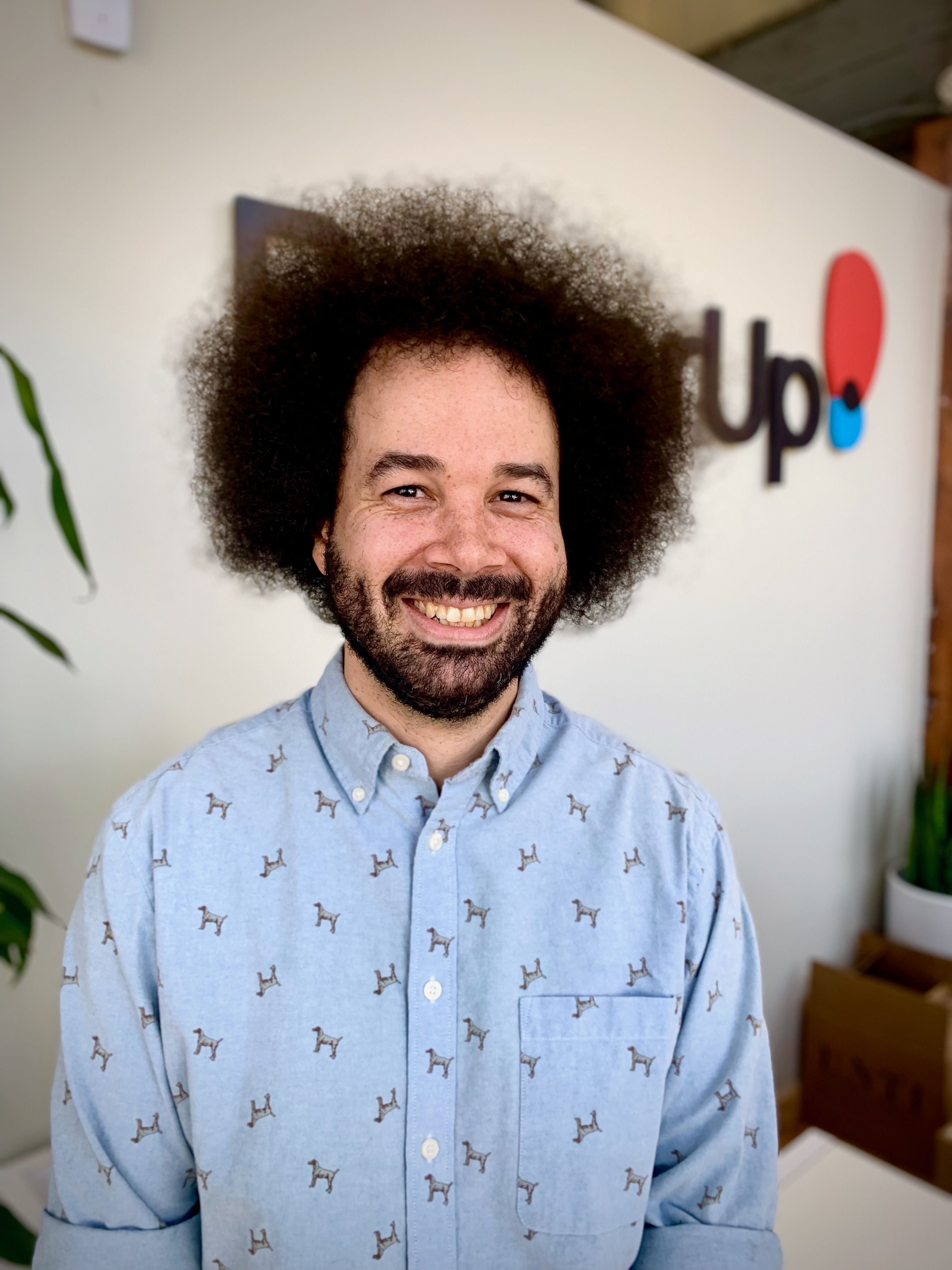
How did he get into computing?
“I was always interested in video games as a kid. And I thought that was a very magical thing. But my dad also was a system administrator at Boeing. So, he helped me build my own computer and give me access to computers at a really young age. I think those two influences were probably the main things that got me really interested in computers.”
What kind of company does he work at?
“I work at a startup, and I started as employee number three. Now we’re at over 200 employees. Th[e] ability to have agency and ownership [at a startup] was very powerful for me.”
Brian started out by working at IBM, a large firm. He eventually transitioned to a start-up because he enjoyed the greater freedom and autonomy there.
What keeps him in computing?
“There is some level of motivation now around teaching others… There’s the level of understanding where you can work or do something, and then there’s a level of understanding that you actually need to be able to effectively articulate that to someone. There’s a slight difference. And it also just allows you to see it from a new perspective.”
What subfield is he interested in?
“I came from doing a very different kind of programming to doing web development. I didn’t know what I was doing, and a lot of it was learning.”
Bryan is currently a manager, but he started with his company as a web developer. He actually entered the industry as a low-level, database programmer. Once he joined his current company, he made the transition to web development.
Section 11.2.3 Briceida Mariscal
"I love learning about new technologies and trying them out. I know that if I keep digging at them, it will click, and I will learn them. Just knowing that I know that I can learn helps make me love the field."
How did she get into computing?
“In 2016, I was working as a security guard at Jack in the Box. During that time, I met my boyfriend. He was the one that encouraged me to go into tech, because a friend of his told him that, hey, you can just self-study. It was very hard for me. But he kept pushing me and telling me, ‘Yeah, I think you can do it. You’re very smart. You can do it. You can definitely do it.’”
How does she view CS?
“I was an anthropology major. I was always trying to figure out how the world worked and how humans interact. As a software engineer, I get to see the part of life as a member of that society. I previously read books about how tech impacts society, but being inside this field gives me another perspective.”
Coming from an anthropology background, Briceida views CS in an interdisplinary manner, where she highlights the anthropological aspects of it. That gives her a unique perspective.
Who does she look up to?
“A role model for me was my previous tech lead. He was a white man. I admired him because he was humble. He was not arrogant. He treated me like an equal. He explained things to me like an equal. I consider him a role model, because that’s something that I want to achieve once I become a tech lead.”
What subfield is she interested in?
“During the bootcamp was when I decided that I wanted to be a back-end developer. I did not want to do front end, because it’s a different kind of programming where you’re gluing things together. I just didn’t find it interesting.”
Briceida does back-end developing, where she builds and maintains the server-side components of web services.
Section 11.2.4 Carla De Lira
"[Computing] is a pretty big part [of my identity], but not everything. I have pet guinea pigs I’m obsessed with. I like to craft. I like to read different kinds of literature."
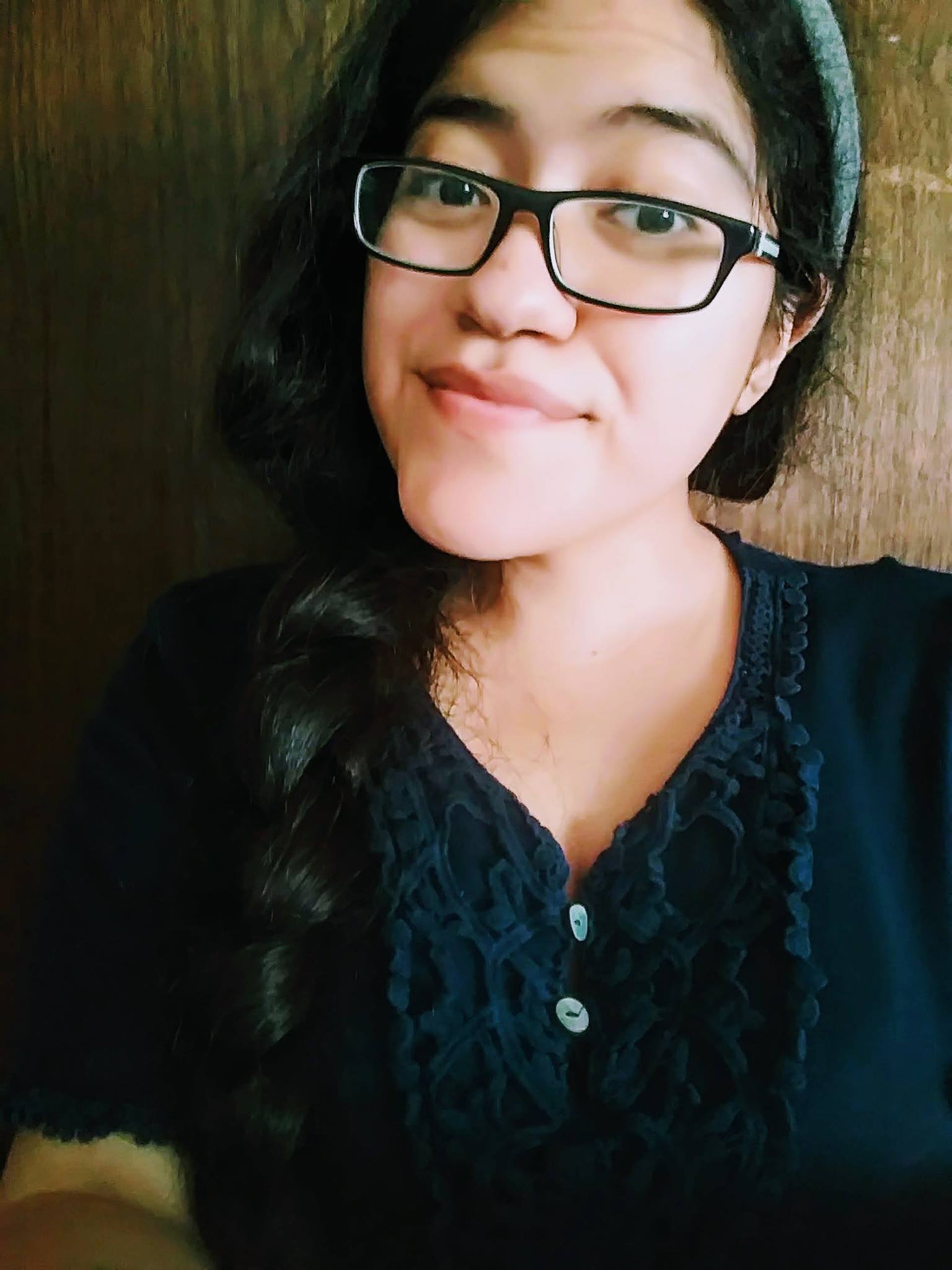
How did she get into computer science?
“My dad was a self-learner and instilled that on me. He bought computer architecture books. I did not understand, but I appreciated that he tried even though his background is not at all technical. Even my mom didn’t really know what was happening, but she was always like, ‘Yeah, you can do it.’”
What challenges has she faced in computing?
“My first time ever TA’ing for a lab, there was a student who was very frustrated that they didn’t get to them, and they were like, ‘Oh, well, she’s supposed to know everything, but she’s female, so maybe not.’ I cried for the whole day. Those really small punches put a strain in my progress. They don’t happen often now. But if the same types of comments were to happen now, I would brush them off”
“I went to kind of a workshop, and I was the only female Latina in a group of kind of white, old males, and they decided to kind of make an example of me as a token, and that reduced my feeling of being a part of a community.”
Carla, being a female Latina, is at the intersection of two underrepresented groups in computing. That has led to isolation and disrespect throughout her career.
What subfield does she work in?
Carla researches the intersection between human-computer interaction (HCI) and computer science education.
How did she get into research?
“Most of my undergrad summers were doing research. The research programs I did pushed me to do grad school. I went to Tapia, a diversity conference for people in computing. They were very welcoming and always gave me feedback. I was starting to develop my own mini self-image as a researcher. I started to see academia as a noble pursuit. I felt like there was a grander purpose rather than working for a company.”
Section 11.2.5 Camille Mbayo
"My parents work for UNICEF, so we’ve always traveled. So, time and time again, seeing people on the African continent being screwed over. And that’s like, ’Okay guys, it’s time.’ It’s time we figure out what our tools are and that we share them. Since I was able to get elite education, I should... bring it back."
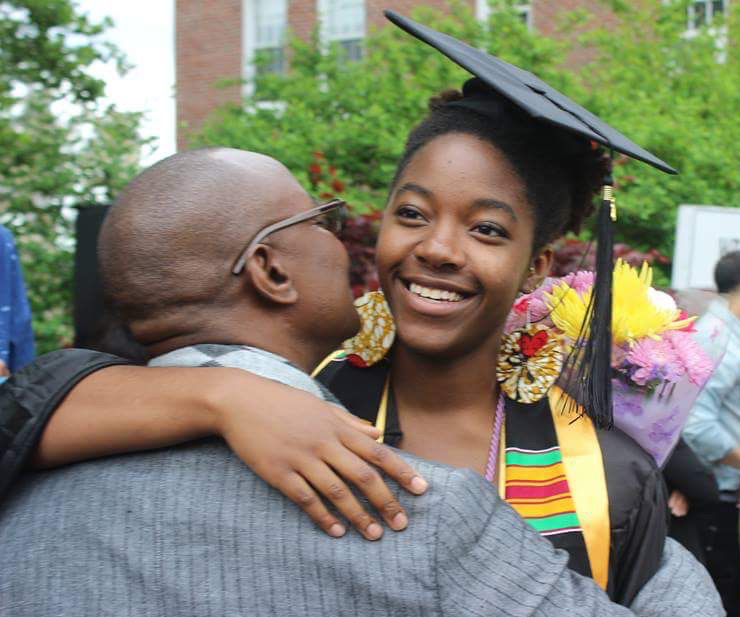
Why did she choose computing?
“I really like how it works with my brain. Everything just made sense in the way that things are processed and learned. There’s also something about being able to just create almost anything.”
What challenges has she faced in computing?
“There are just so many entitled men, particularly white men, who make the experience frustrating.”
“People try to sound more knowledgeable than they are, and to someone who doesn’t know, that sounds like they know what they’re talking about. That definitely made me feel like I was behind. I never fully believed that I was a computer scientist until I had an internship.”
Camille has dealt with sexism and impostor syndrome in computing. The sexism has led to her ideas being underappreciated, while her impostor syndrome has led to her underestimating her own ability.
What subfield does she work in?
Camille is currently a developer, but she wants to pursue postgraduate studies analyzing the intersection between computer science and development (either global or policy development).
How did she tackle impostor syndrome?
“The internships gave me the confidence boost that I needed. I was just dropped into this internship. It seemed like they needed someone of more experience than I had, so I just felt overwhelmed. My manager saw that I was shutting down and then he said something like it’s okay, we’re all learning here. And it was just such a short type phrase and that just resonated with me. It’s not talked about. It’s told that either you have the skills or you don’t.”
Section 11.2.6 Destini Deinde-Smith
"I have always identified as someone who really loves being creative but also enjoys things that are sometimes technical. I feel as though being a software engineer and studying CS — it’s this way to join those two things that I’ve identified with."
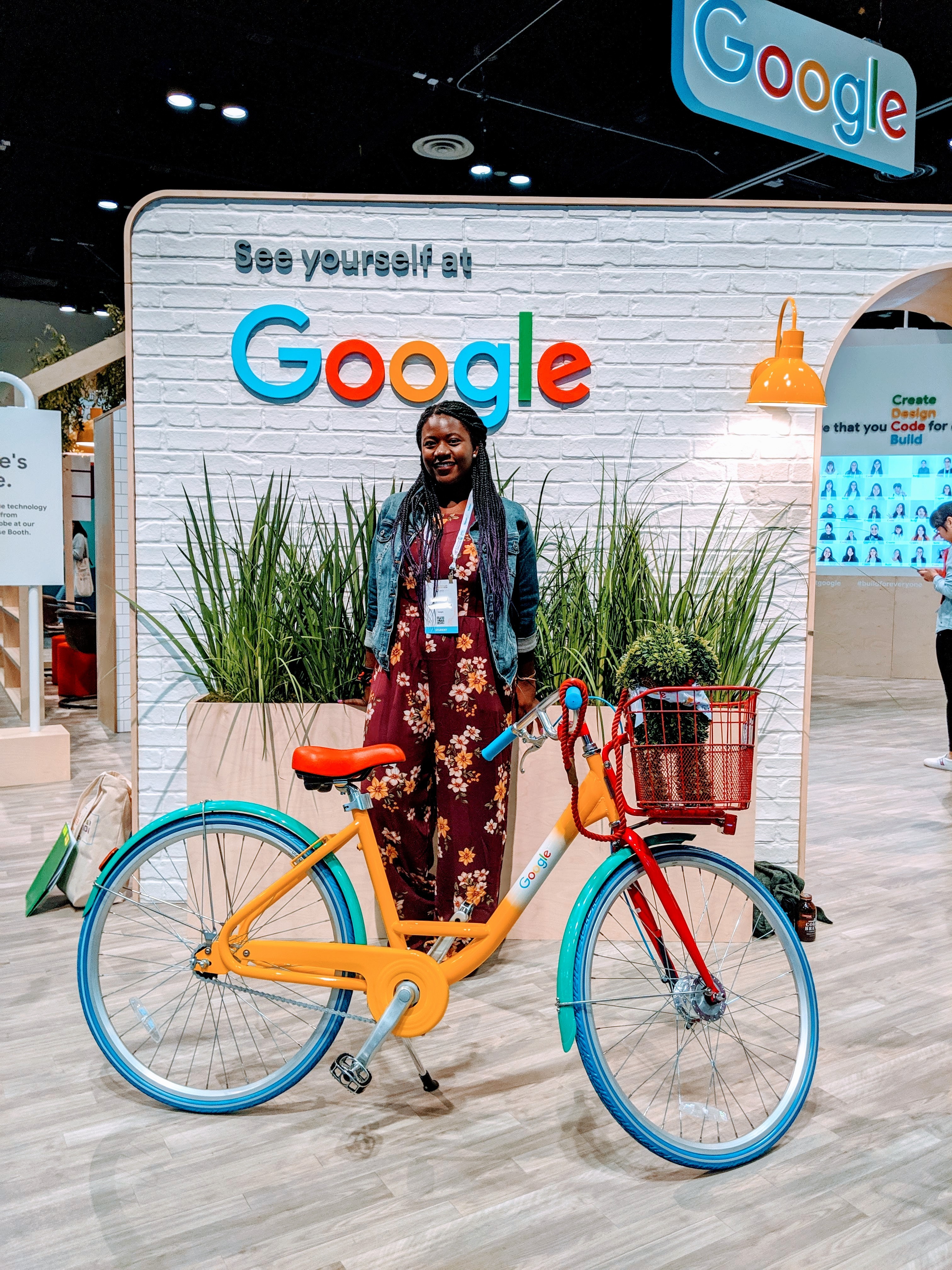
Why did she choose computing?
“Originally I was considering studying English in college. [My parents] went to a seminar about careers in CS. The more that I did it and the more I learned how to be creative with computer science, the more it became something that I wanted to keep doing. For me who wanted to study English, who always did arts and crafts, I didn’t really connect to CS as something I wanted to continue until I saw how I could still be creative. [In] my first internship, I was an intern that worked on an AR team and we developed a drawing app to draw in 3D. I realized all the debugging and hard math felt worth it when I got to see something — it connected [that] I was doing this thing that was very creative.”
What challenges has she faced in computing?
“In the beginning, I was discouraged by the fact that sometimes you meet people who start really, really young. When you get to college, there’s people who have been programming since they were 10 or 12. They tend to be guys, and they tend to be really cavalier about it. That was really discouraging — someone was asking a question and they were making fun of it. They were like, “Oh, that’s such a stupid question. Didn’t we do this yesterday.” Even though there are so many beginners, the voices of people who have more experience are the loudest.”
Destini has faced a challenge that many in CS face: impostor syndrome. Since the loudest voices tend to also be the most experienced, average students perceive themselves as behind the curve.
What subfield is she pursuing?
Destini is studying computer science, a branch of computing that deals with mathematical models, analysis, and algorithms.
Why did she choose computer science?
“There’s things that have to do with tech that aren’t strict coding or sometimes seen as what female engineers are drawn to — typically being UI or UX. It’s the stereotype of women being drawn to soft skills that made me want to get a degree in something that people couldn’t dispute was CS. It made me want, at the minimum, to have a piece of paper that said computer science. I could point at it and say, ‘No, no I learned computer science.’”
Section 11.2.7 Eric Espinoza
"I don’t think that your identity has to be tied to what you do. If anything, the skills needed for the job — learning new ideas and new technologies — identifies an individual that likes to play with things."
Why did he choose computing?
“I love the possibility that with the knowledge and the skills, a small type of computing instrument and the resource of time and discipline, sky is the limit. So I really like the opportunity to create anything really.”
Like countless other programmers, Eric enjoys how programming enables him to build whatever he can think of, whether it’s helping him, his employer, or the world.
How did he pursue computing?
Eric studied at a full-stack boot camp — a boot camp that teaches both front-end (constructing the components that users interact with) and back-end development (building the technologies that facilitate the front end).
What subfield is he working in?
“Yeah, I’m a DevOps engineer — [a role that] basically writes code that works within a company so that a developer can use that pipeline that I helped create. And they can send that code throughout the company so that the customer never sees the test code or the code that’s in work — they only see the final product. The work that I do is creating the pipeline to take the code that the developers use from start to finish.”
Who does he look up to?
“[A big mentor] was a teacher that basically showed me the way to speak. I took more than just the coding skills themselves. I was able to see that person as a mentor beyond just coding and see their accomplishments and what they were able to do beyond it and then also why they code. It was lucky to find a master in the field that not only was a very technically inclined and skilled coder but also just a general good human being that I respected and admired.”
Section 11.2.8 Dr. Gloria Opoku-Boateng
"[Studying computer science in Ghana] made me stay in tech, because if I had gone up in the United States and seen all these disparity and different options, I probably wouldn’t have stayed in tech."

Why did she choose computing?
“At the time [when] I was done with high school, I wanted to be a doctor. I found that the school that I wanted to get my medical degree from had computer science. I weighed my options and realized that I could always come after college and become a physician, but I cannot go back and learn computing. And so, with my really naive understanding, I decided to get my head steady in computer science and learn more about it. But when I started first year computer science… I found that I was interested in computing. So I never went back into medicine.”
How did she pursue computing?
“[Computing education in Ghana] was non-existent. On a scale of one to 100, United States computing education was like 95. Ghanaian computing education when I was an undergrad was like two. We coded on the blackboard, like in the chalkboard. We would code on that. And you can imagine, you don’t even know when there’s an error. And in the classes we had only two females per like a class of 67… It just taught me how to be resilient.”
Dr. Opoku-Boateng started in computing in Ghana, as an undergrad (although she planned to eventually switch to medicine). Ghana’s lack of resources was a double-edged sword — it made learning harder, but it made the students more resilient. After finishing her undergrad, she went to the United States for her postgraduate studies, eventually earning her PhD.
What subfield is she working in?
Dr. Opoku-Boateng works in UX — the subfield that manages user experience. In other words, she helps design interactions between the user and the back-end code that does the actual computations.
What discourages her in computing?
“Society not realizing that tech and societal disparities work hand in hand. We talk about tech jobs, and even with a COVID situation, a tech job being good because you work from home. But it’s not like you have a buffet of different jobs that you can pick and choose. Getting access to a computer earlier in life. Getting access to somebody who can teach you or help you code. Getting access to a community or a family that supports your journey. We fail to realize that a lot of people who are working in hospitality, in service, in other industries might not have the privilege to be working in tech.”
What advice does she have?
“The advice that I would add to anybody pursuing computing is to not limit themselves to where their computing career can go and what else they can mix and match with a computing career. A lot of people are bogged down by, ‘I want to be excellent in coding,’’ Or, ‘I want to be excellent with computer architecture or networking or cyber security.’ To be really successful is to know how to apply the computing that you have learned to different environments and different teams and different kind of areas where people want to build more on. And so just keep an open mind.”
Section 11.2.9 Dr. Juan Gilbert
"My strength [is] be design and implementation. Being able to look at a problem, design something and build prototypes and things. That’s what I enjoy and that’s what I would say I’m pretty good at."
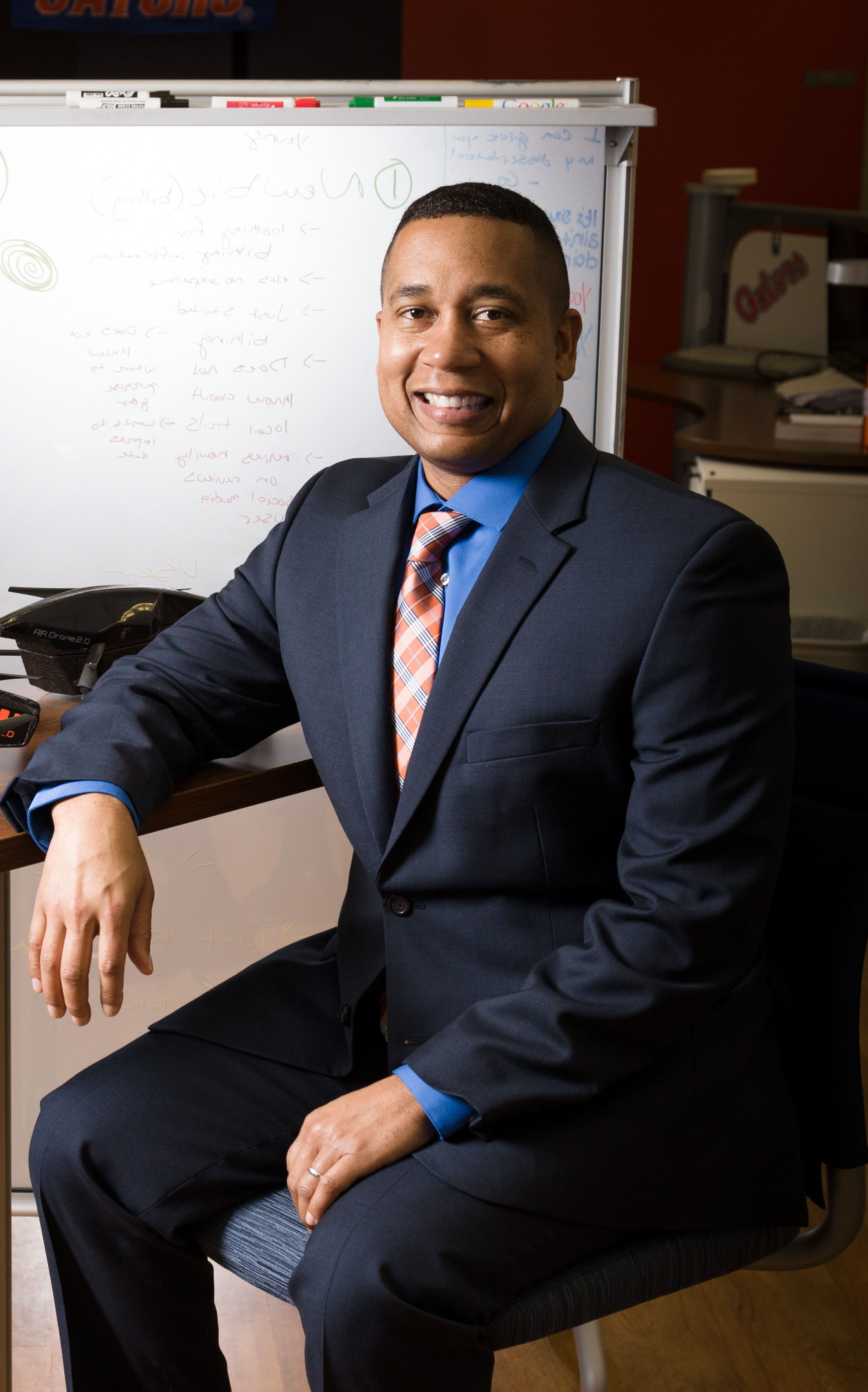
How did he originally get into computing?
“Well, when I was an undergrad, I went to college as a chemistry major and did very well. And a senior told me, ‘Wow, you’re going to do well in chemistry. You’ll graduate. You’re going to go to grad school.’ And I said, “Wait a minute, go where?” He said, “Grad school. That’s what we do in chemistry.” And I said, “I’m the first in my family to go to college. I thought you went to college to get a job.” So I changed my major to computer, because I knew I could get a job and I had had a course in programming that I liked. That’s how it all started for me.”
Why does he enjoy computing?
“What encourages me is the pervasiveness of computing and its ability to solve societal problems. There are plenty of problems in society and I think using computing and technology to address them, that encourages me.”
What barriers has he faced?
Dr. Gilbert’s biggest problem was a lack of diversity. For a long time, he was the only African American he knew that was pursuing a PhD. Once he ran into another, though, he found a community of peers that helped him through his journey.
Where does he find support?
“Other colleagues, again, some of my mentors. That’s where I would seek it. And to be honest with, sometimes my students. My students come in and they talk to me, so they help me and they don’t even know it… Most recently the issues around the killing of Mr. Floyd. My students wanted to talk about it. Being able to have the conversation with them was helpful.”
What does he work as?
Dr. Gilbert is a professor and department chair at a university. He teaches, collaborates with other faculty, and researches.
What made him pursue academia instead of industry-related jobs?
When Dr. Gilbert was still studying, the dean pulled him aside one day and told him that he’d make a good professor. That’s what initiated his journey of becoming a professor.
What does he research?
“I have a couple of exciting things. One, we work on election technology voting systems. I built an open-source voting technology called Prime Three. It’s the only open-source voting system to be used in state, federal, and local elections in the United States of America ever. And so we have some new innovations that are going to help people vote. We have some new innovations and dealing with lines when people go to vote. And we have a project on bias and AI that I’m excited about, where it looks like we’re going to be able to help de bias software, make it less biased. So those will be things that make me excited.”
Section 11.2.10 Luisa Morales
"I feel that I have more empathy than some other software engineers. I am perfectly okay explaining things, where other people might not be."
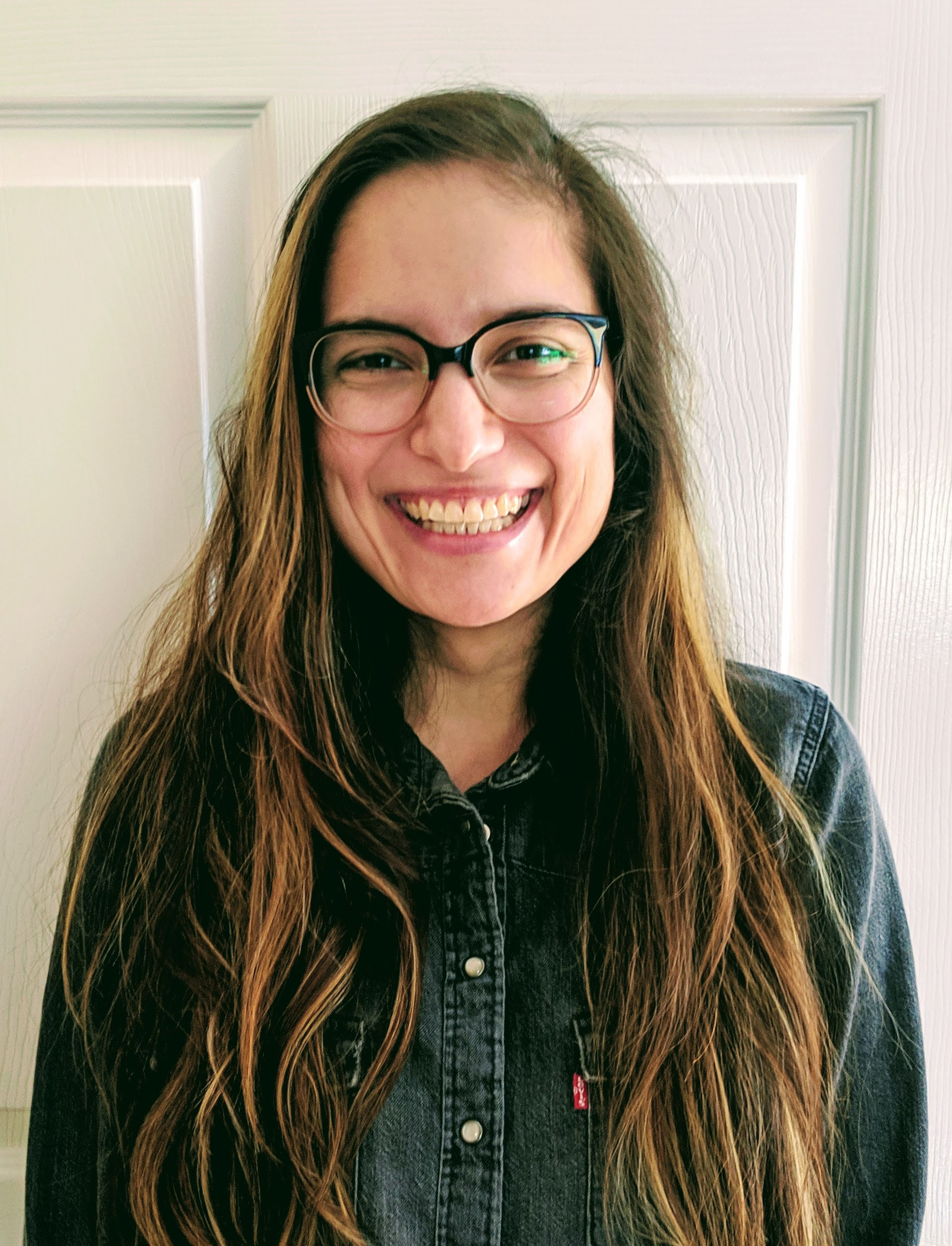
How did she get into computing?
“My friends. We all had to build our own little websites for class. We would have our own mini competitions to see whose would be the nicest, so that was very friend-driven. Nowadays, it’s more about my own passion for the field.”
What did she study as an undergrad?
Luisa started college as an English major and eventually transitioned to an economics major. Once she graduated, she started a media consulting company, which included a bit of web development with WordPress and other tools. That kept her engaged in computing, which is why she decided to go further into technology.
How does her interdisciplinary experience affect her career now?
“Having a background in economics helps me understand the impact of the software that I write, how I can impact the business, and how I can add to more revenue, customers, or whatever it might be. Having done marketing, I understand the importance of having a clear message, so all of that is part of just being better at communication.”
How did she pursue computing?
“I decided to teach myself how to program. I did some online, worked on some side projects, and ran through some online courses. I worked for three-and-a-half or four years, and then I decided to do the master’s.”
What obstacles has she faced?
Like many other developers, Luisa dealt with imposter syndrome. This syndrome was compounded by the fact that she is self-taught, Hispanic (a racial minority), and female (a gender minority).
She has dealt with impostor syndrome in two ways. First, she’s begun to accept that she won’t know everything. No matter how much she studies, no matter how much experience she has, there will always be problems she can’t solve, and that’s okay. Secondly, she’s started reading about other people’s experiences with impostor syndrome. Realizing that it’s a common issue makes her feel less alone.
What does she work as?
“My initial interest was in back end development, which just means that we work closer on the data side. I couldn’t find really good resources for picking it up. It was hard for me to figure out what the code that I was writing was doing, which is why I ended up in front end development (where you develop the interface that users interact with). That was one switch, and now I did front end development for about three-and-a-half to four years. [Now,] my focus is back on being on back end development, purely because I want to be more familiar with that side of software engineering.”
Section 11.2.11 Lucas Vocos
"People have this perception of logic based, math based thinking [as] not very creative, very by the book. People have the perception of creativity and design in another way. I am in a unique place where I can do both. I can help build something beautiful but I can also use logic, use math, use methodologies that achieve that goal."
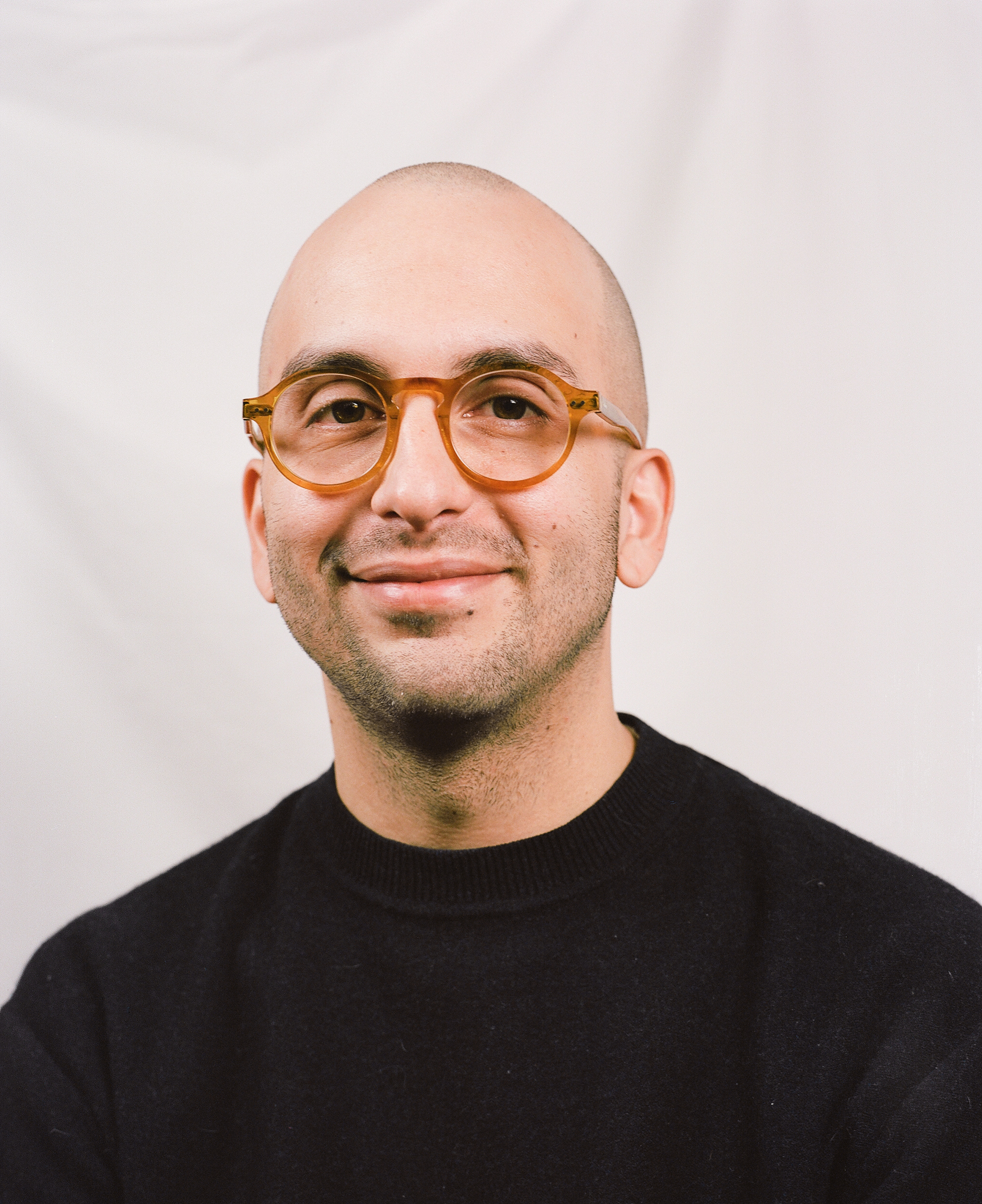
How did he get into computing?
“My parents are from South America. At the time, it was pretty common for people in the Latino community to work for multi-level marketing companies. My dad worked for a number of years for one of these companies but eventually, wanted to work for himself. My first ever use of it was actually building my dad a static site for his company, really just a digital business card.”
How did he study computing?
“Part of the reason why I didn’t go to a college was fear of debt. I come from a very low-income, working class Latino family. My dad is an Uber driver and my mom was a domestic worker. We didn’t have the resources.”
Lucas couldn’t afford college. After high school, he was reintroduced to computing through a retail job at Apple. Eventually, that job led to him building a network and wanting to learn more. He first taught himself using online resources, and he used the skills he learned to enter the industry. Once he had more funds, he also attended a bootcamp to reinforce what he knew.
What is he working on?
“The aim of the project is to help the city of Detroit tackle its digital divide. Quite a bit of the population doesn’t have access to broadband internet. Even the parts of Detroit that do have access don’t have great access. The idea is to get people connected, get people devices, and get people skills.”
What does he work as?
Lucas works as a freelance web developer. In other words, companies contract him to help build websites but he’s not tied down to any specific business.
What advice does he have?
“I’m a college dropout. I don’t have a formal education, and even then, what I studied in college was definitely not in the STEM world. It wasn’t science or technology or anything like that. But I’ve been working at learning and adapting and learning and so I would say, if you like the thrill of a puzzle, if you can think critically, if you can think methodically, this is an industry that can change your life and that of your family.”
Section 11.2.12 Lien Diaz
"All of this technology is being developed and created and tested and thought up without people that look like me, without people that have darker skin than me, without so many perspectives, meaning that they’re leaving out certain groups in our population that are going to be affected greatly. I don’t think that’s right."
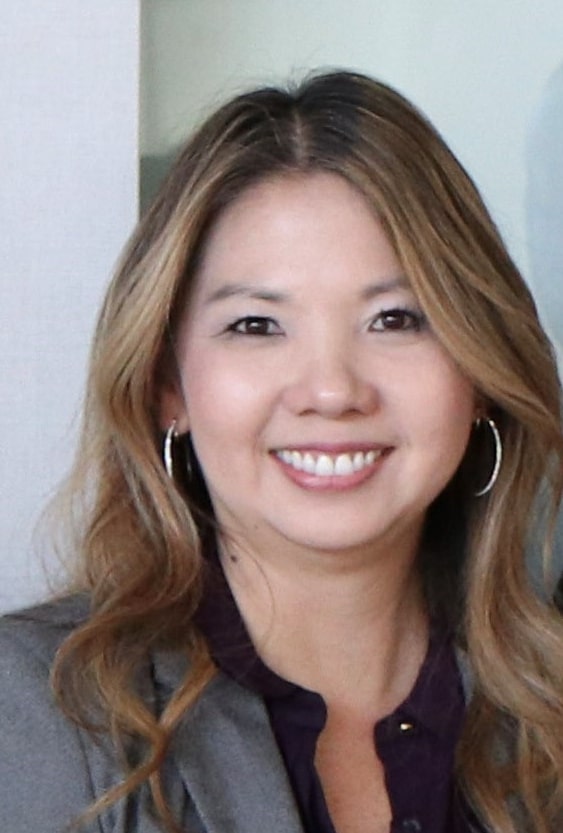
How did she get into computing?
Lien started her career at College Board where she expected to help write the Advanced Placement curriculum for math courses. Upon arrival, she realized she also had to help create the AP Computer Science courses. That requirement forced her to study Java on her own time so that she could contribute.
What does she work as?
“We’re building strong computer science programs by working with teachers, building their teaching capacity, their teaching efficacy, and utilizing the right resources, curriculum and other resources so that they’re able to build this computer science program.”
Lien previously worked at College Board, where she helped develop and create AP Computer Science Principles — a course designed specifically to tackle issues of inequality in computing. Now, she’s using her experiences there to guide her work at the Constellations Center at Georgia Tech, where she’s helping develop computing programs across the nation.
How did AP Computer Science Principles revolutionize computing education?
“What we were trying to do was not only include the major important computer science concepts but also include things like [teaching kids to] express themselves through their programing, communicate their thinking through their skills, and work well with their peers. We wanted to emphasize that creativity is a good thing when you’re programing.”
How does she want to change computing education?
“I’ve been thinking about trying to do more partnerships between colleges and school systems, K12 systems. They need to be a two way partnership so that high school teachers can understand what the expectations are at the college level, but also the college level, they need to understand what’s happening at the high schools. I believe part of the role of higher ed institution is to build those bridges between what’s happening in secondary and build those bridges into post secondary a lot better.”
What advice does she have?
Lien wants students to apply their computing skills to real-world problems in their communities. It allows them to build their skills while also uplifting their community.
Section 11.2.13 Milly Rodriguez
"I didn’t know that people go to school for [computing], didn’t know that there was programs that could help build websites, didn’t know there was books that I could read on computers. I didn’t realize the possibility of a career until really after college was done."

How did she get into computing?
“I was just encouraged because I wanted to connect with other people online. So I was creating websites. I had my own blog, I was redesigning my website every month or so. I had hosting. And that was just a way to connect with other people that were also interested and also have their own website. There was nobody really that kind of pushed me to be in computers.”
How did she pursue computing?
Because she didn’t know that computing was a viable career path, Milly didn’t study it in college. Instead, she worked retail for a bit until she rediscovered her love for computing. She saved for a bit, quit her job, and went to a bootcamp. It was a gamble, but it paid off. She ended up with a solid education and a career shortly thereafter.
Who does she look up to?
“I got some personal assistance from a person that kind of became a mentor that was already working in the field, so I was able to have some direct, constant contact with somebody that was doing the job. This was a black male, and he was a senior engineer at a really well-known company… This person kind of became my goal. This person was well established, was able to take care of his family, was able to reach your financial goals. And this is something that I saw myself doing.”
What does she work as?
Milly is an assistant software engineer at a telemedicine company. She mostly serves as a front-end developer, a role that designs the visible parts of a website (i.e., the components that users interact with). Specifically, a lot of her work deals with retooling sites to be more accessible for visually or hearing-impaired people.
Section 11.2.14 Dr. Nettrice Gaskins
"We don’t have conversations where software engineers talk to artists, and artists get together just to have conversations about this new field that’s emerging. And yet, it is emerging and it is something that I think would really interest a lot of people who would not even enter into computers or computation."
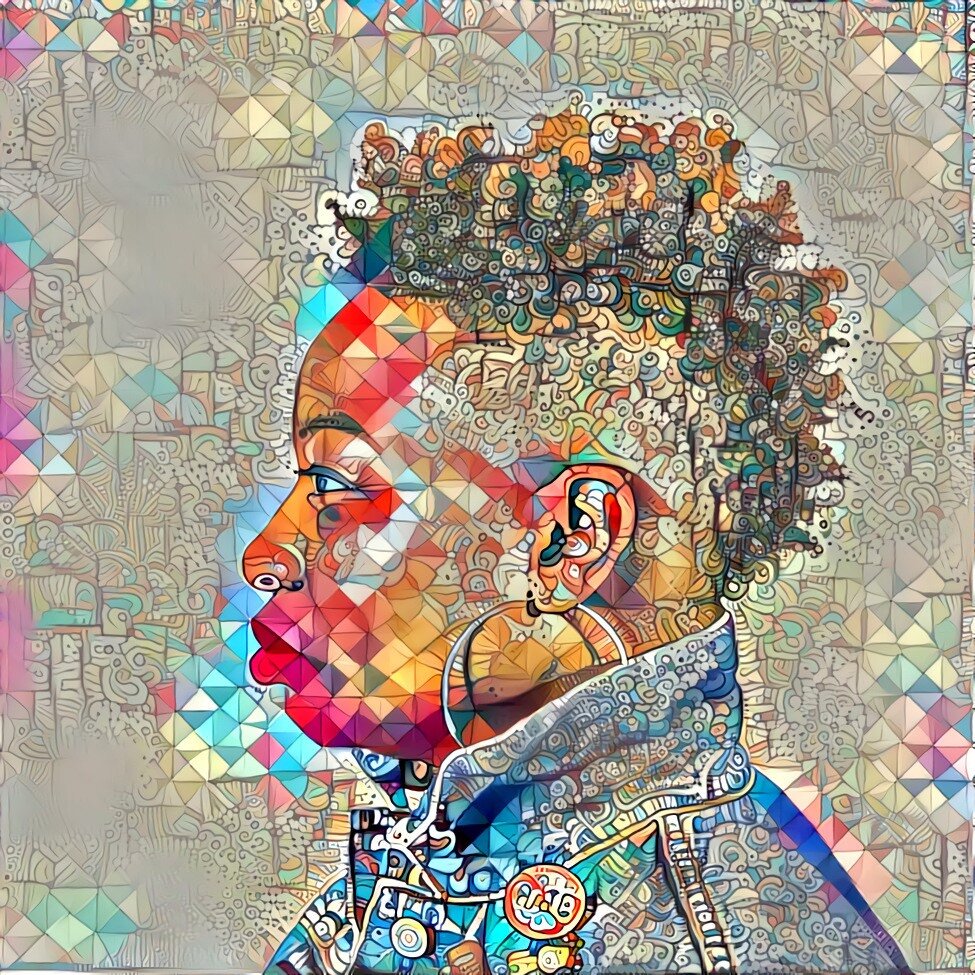
How did she get into computing?
“I did not want to do computer programming. I wanted to be an artist. Until my [art] teacher approached me about her [computer graphics] course, I was not interested in computers at all. I told her no one or two times because I had no interest, because I’m looking at my mother. And I’m seeing what my mother does, and that’s not what an artist does. But she convinced me to do it. That showed me you could use the computer as a tool to make art.”
What does she work as?
Dr. Gaskins is an assistant director at Lesley University and an artist.
What was her graduate work focused on?
Dr. Gaskins originally focused on using technology to create art. Eventually, she switched to community work. When teaching, she saw a massive divide in the computing resources and facilities available to different socioeconomic classes and racial groups. She pitched the idea of creating a computer lab for underserved students, and she eventually got funding and started it up, helping hundreds of kids in the process.
How does she tailor her teaching to her students?
“How do I teach how to program from a culturally relevant, creative point of view for students that it would resonate with? At the time, I was using Sojourner Truth’s speech, Ain’t I A Woman?, to have them understand it as a if then or else statement. When they saw this code, they realized that stuff in their world or stuff they may have heard of could actually be creative. Next thing you know, you learn about algorithms as step-by-step instructions and they learn about arrays. So they learn it through things that are familiar to them, and so I’ve continued to do that work as a professional today.”
What difficulties has she faced?
Like many black women, Dr. Gaskins struggled to find people she could relate to. Sometimes, she was excluded for being a woman. Other times, she was excluded for being black.
Additionally, taking an unconventional career path (artistic computing but not computer graphics) meant that she had to forge her own path. That meant that institutions often had to create special roles for her, and she couldn’t really find a mentor.
Where does she find support?
“I had an exhibition recently. I used my collaboration on artificial intelligence to generate an image that was put up in the exhibition. I saw an older group of people come by and they argued amongst each other about which medium was used to paint the work. So was it watercolor, or was it an oil painting or acrylics? And then, they would read the placard and the placard would say artificial intelligence, and they had no clue.
And then, I saw a young man and he was so happy. He was excited and I couldn’t understand why he was looking that way when he read the placard. So his mother sat next to me and said he was a software engineer. She said, ‘My son writes AI, writes for AI.’’ So I said, ‘Oh.’ We had a brief conversation, and he was shocked that you could make something look like a painting with AI. That is something that I’ve been working on for a while, and it brings two different camps of people together for different interests. Just the image itself, some people think it’s beautiful. Other people think it’s beautiful, but then they know the technology behind it or the computation behind it.”
You have attempted of activities on this page.

